Bayanihan Spirit Takes Center Stage at International Filipino Cultural Gathering
Share
June 02, 2026
Updated Oct 16, 2026
7 min read
275 views
MANILA, Philippines — Across continents and cultures, the enduring Filipino value of bayanihan is taking center stage as overseas Filipino communities organize cultural gatherings that celebrate unity, heritage, and collective action.
From North America and Europe to Asia, the Middle East, Australia, and New Zealand, Filipino organizations are creating spaces where culture, community service, and social connection come together. These events have become powerful expressions of the values that have long defined Filipino identity: cooperation, generosity, resilience, hospitality, and mutual support.
As millions of Filipinos continue to live and work abroad, cultural gatherings have emerged as vital platforms for preserving traditions while strengthening community ties. More importantly, they have become living examples of bayanihan in action, demonstrating how a centuries-old Filipino value continues to remain relevant in an increasingly globalized world.
Historically, bayanihan referred to the practice of entire communities helping a family move their traditional house by carrying it together. Over time, the concept evolved into a broader symbol of community cooperation and collective responsibility.
Today, while the physical act may be less common, the underlying spirit remains deeply embedded in Filipino culture. Across the world, Filipinos continue to embody bayanihan through volunteerism, charitable initiatives, cultural preservation efforts, and community support programs.
Community leaders say international cultural gatherings provide ideal opportunities to showcase these values.
"These events are not just about celebrating culture," explained one organizer. "They are about demonstrating who we are as a people and how we support one another."
The growing popularity of Filipino cultural events worldwide reflects the expanding influence of overseas Filipino communities. What were once small gatherings organized by local associations have evolved into major celebrations attracting thousands of attendees from various backgrounds.
Visitors attending these events often encounter much more than traditional performances and food. They witness a strong sense of community built through collaboration, volunteerism, and shared purpose.
Preparation for many cultural festivals begins months in advance. Volunteers work together to coordinate logistics, recruit performers, secure sponsorships, organize educational programs, and ensure that events run smoothly.
Community members frequently donate time, skills, resources, and expertise without expecting compensation. Organizers describe this collaborative effort as one of the clearest modern examples of bayanihan.
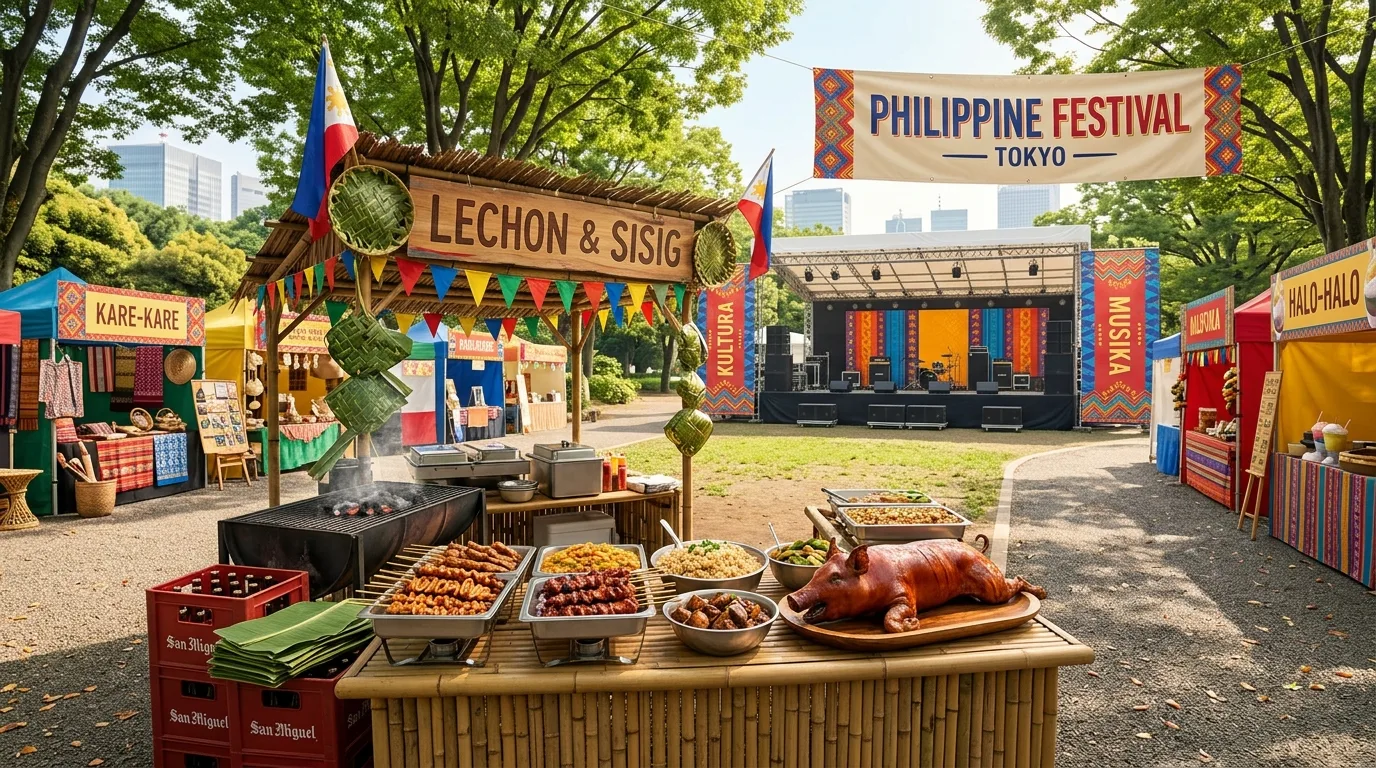
Across major cities such as Toronto, Vancouver, New York, Los Angeles, London, Dublin, Paris, Rome, Madrid, Berlin, Amsterdam, Dubai, Abu Dhabi, Singapore, Tokyo, Sydney, and Melbourne, Filipino organizations continue to demonstrate remarkable levels of community engagement.
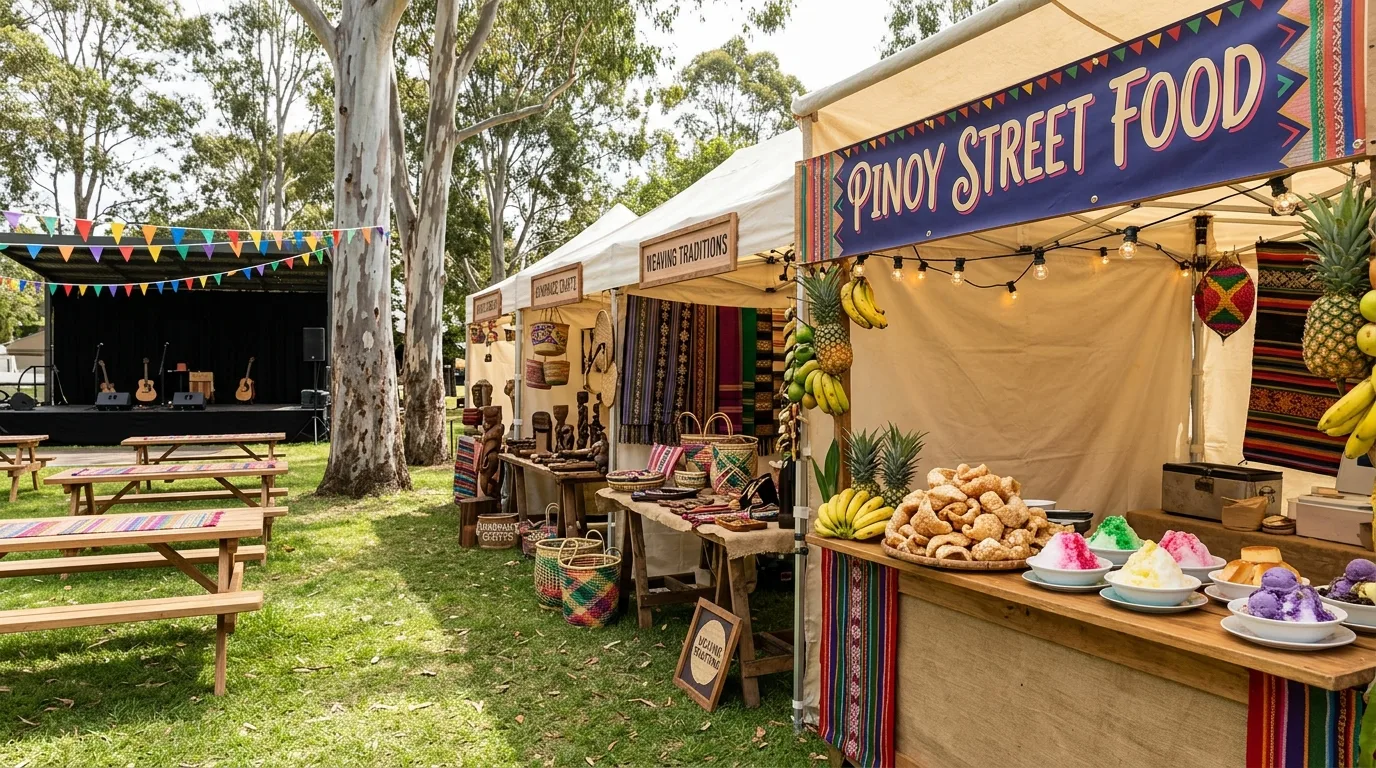
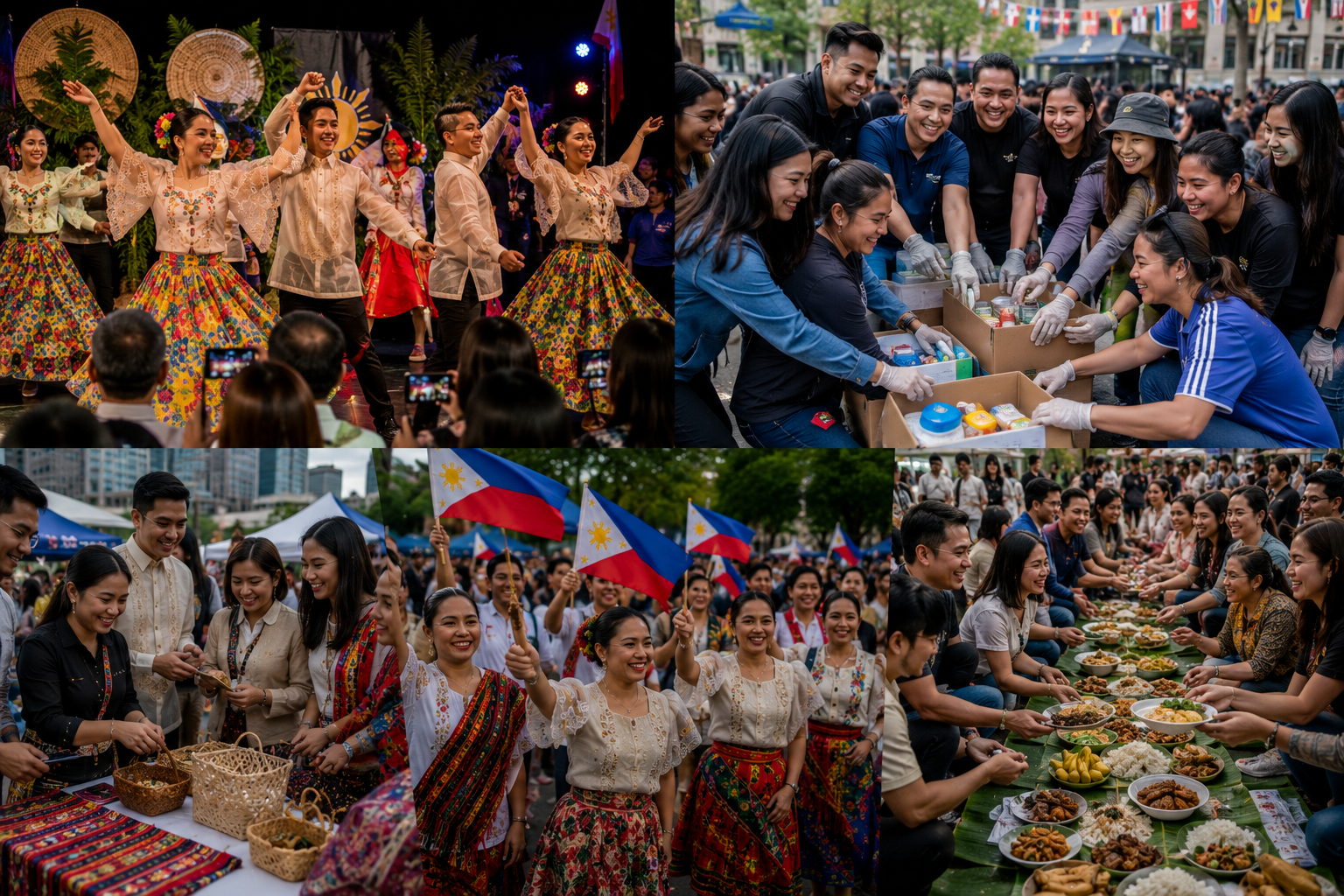
These gatherings often include cultural performances, heritage exhibits, educational workshops, youth leadership activities, food festivals, and charitable initiatives.
Traditional music and dance remain among the most popular attractions. Cultural groups perform routines representing various regions of the Philippines, highlighting the country's diverse heritage.
These performances not only entertain audiences but also help preserve traditions for future generations. Community leaders emphasize that cultural education is essential to maintaining identity among younger Filipinos growing up abroad.
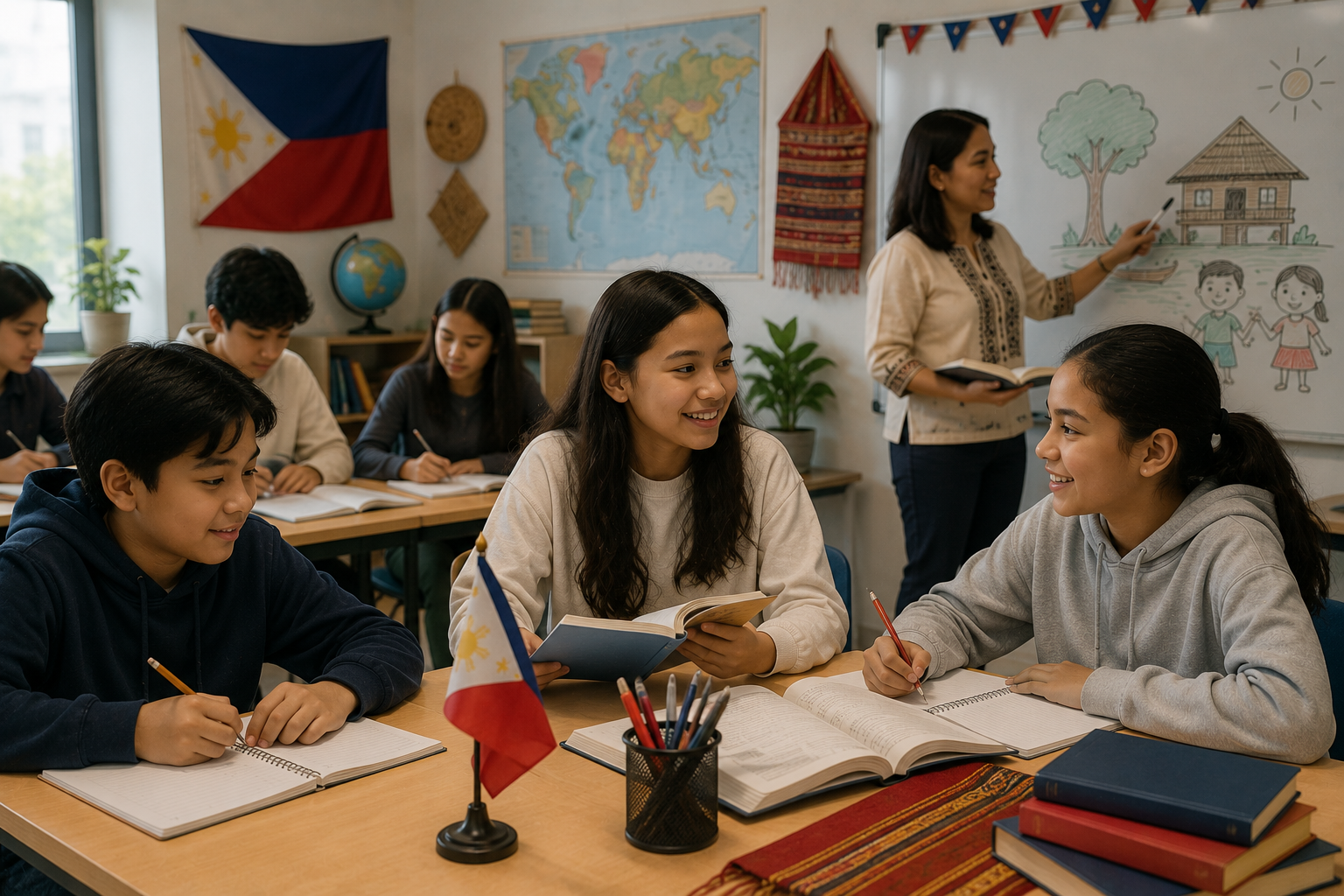
Youth participation has become an increasingly important focus of international Filipino organizations. Educational programs, mentorship opportunities, leadership workshops, and cultural activities are designed to help younger generations understand and appreciate their heritage.
Many young Filipinos actively contribute to event planning and community initiatives, ensuring that traditions remain relevant while embracing modern perspectives.
Food also plays a significant role in bringing communities together.
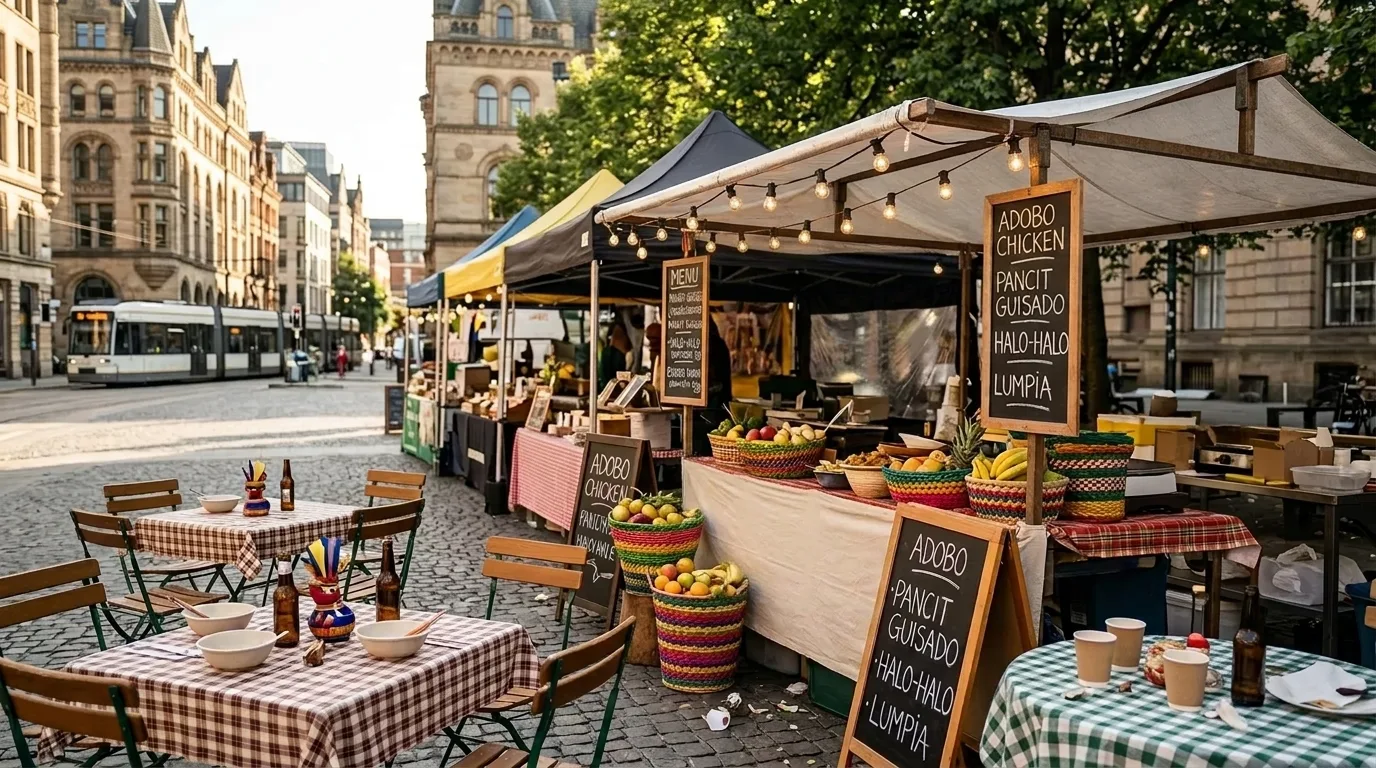
Filipino cultural gatherings frequently feature traditional dishes such as adobo, lechon, pancit, lumpia, sisig, kare-kare, halo-halo, bibingka, and numerous regional specialties.
For overseas Filipinos, these foods often evoke memories of family gatherings, hometown celebrations, and childhood experiences.
For international visitors, they provide opportunities to experience Filipino culture through one of its most accessible and beloved forms—its cuisine.
Community leaders often describe food as a universal language that encourages cultural exchange and fosters understanding among people from different backgrounds.
Beyond cultural celebrations, many Filipino organizations integrate charitable activities into their events.
Fundraising campaigns supporting disaster relief, scholarship programs, healthcare initiatives, community development projects, and humanitarian causes have become common features of cultural gatherings.
When natural disasters affect communities in the Philippines, overseas Filipinos frequently mobilize quickly to provide assistance.
Community organizations coordinate donation drives, fundraising events, and relief campaigns that generate significant support for affected families and regions.
Observers note that these efforts consistently demonstrate the enduring relevance of bayanihan in contemporary society.
The willingness of individuals to work collectively for the benefit of others remains one of the defining characteristics of Filipino communities worldwide.
Professional networks also play an important role in strengthening community ties.
Filipino healthcare workers, engineers, educators, entrepreneurs, technology professionals, and business leaders often participate in cultural gatherings as mentors, speakers, sponsors, and volunteers.
These contributions help create opportunities for professional development while reinforcing a culture of mutual support.
Many successful professionals view community involvement as an important responsibility and a way to give back to future generations.
Entrepreneurs have likewise become major contributors to community events.
Filipino-owned businesses frequently sponsor cultural festivals, provide resources for community programs, and support charitable initiatives.
Their involvement helps sustain cultural activities while demonstrating how business success can contribute to broader community development.
Technology has expanded the reach and impact of bayanihan in recent years.
Social media platforms, online fundraising tools, virtual events, and digital communication networks have enabled Filipinos across different countries to collaborate more effectively.
Community groups can now organize events, coordinate volunteer efforts, and provide assistance to those in need regardless of geographic location.
These digital tools have strengthened connections among Filipino communities while creating new opportunities for cultural engagement.
The influence of bayanihan extends beyond Filipino communities themselves.
Many cultural gatherings attract diverse audiences interested in learning about Filipino traditions, values, and experiences.
Visitors often leave with a greater appreciation for the cooperative spirit that characterizes Filipino culture.
Multicultural organizations, local governments, educational institutions, and nonprofit groups frequently partner with Filipino communities on events and projects that promote cultural understanding and social inclusion.
These collaborations highlight the broader relevance of bayanihan as a model for community-building and civic engagement.
Experts studying immigrant communities often point to Filipino organizations as examples of how cultural values can strengthen social cohesion.
The emphasis on cooperation, mutual support, and community responsibility contributes to resilience and long-term success.
As migration continues to shape societies around the world, these values are increasingly recognized as valuable resources for fostering inclusive and connected communities.
Community leaders believe that preserving bayanihan is just as important as preserving traditional music, dance, language, or cuisine.
They argue that cultural values provide the foundation upon which communities are built and sustained.
This belief has inspired many organizations to incorporate community service, volunteerism, and leadership development into their programming.
Looking ahead, Filipino communities worldwide are planning even larger cultural gatherings that place greater emphasis on youth engagement, cultural education, charitable initiatives, and international collaboration.
Organizers are exploring new ways to promote Filipino heritage while adapting to changing social and technological environments.
Many hope these efforts will ensure that future generations continue to embrace the values that have long defined Filipino identity.
The continued success of international Filipino cultural gatherings demonstrates that bayanihan remains far more than a historical concept.
It is a living tradition that continues to evolve while maintaining its core principles of unity, compassion, generosity, and collective action.
In every volunteer effort, every cultural performance, every fundraising campaign, and every act of kindness, the spirit of bayanihan continues to thrive.
For millions of Filipinos around the world, these gatherings serve as powerful reminders that cultural identity is not limited by geography.
Instead, it is strengthened through shared experiences, mutual support, and a commitment to helping others.
As Filipino communities continue to grow and flourish internationally, the spirit of bayanihan remains one of their greatest strengths.
It is a value that inspires people to work together, overcome challenges, celebrate achievements, and build stronger communities wherever they may be.
From local community centers to major international festivals, bayanihan continues to take center stage—not only as a cherished Filipino tradition but also as a powerful example of how unity and cooperation can bring people together across borders, cultures, and generations.
In an increasingly interconnected world, the message of bayanihan remains as relevant as ever: that communities become stronger when individuals choose to help one another, share responsibilities, and work toward a common good. Through cultural gatherings around the globe, Filipinos continue to demonstrate that this spirit remains alive, vibrant, and capable of inspiring people everywhere.
Enjoyed this story?
Share this story