The Rise of Filipino Night Markets Around the World
Share
May 26, 2026
6 min read
259 views
In 2026, a new kind of cultural and culinary phenomenon is lighting up cities across the globe: Filipino night markets. Once a familiar weekend tradition in parts of the Philippines—where food stalls, music, and community life come together after sunset—this concept has now expanded internationally, evolving into one of the most exciting food and cultural trends in major cities from Los Angeles and Toronto to Dubai, London, Sydney, and beyond.
These night markets are more than just places to eat. They are immersive cultural spaces where food, identity, music, and community converge under glowing lights and open skies. For many overseas Filipinos, they offer a taste of home. For everyone else, they are an introduction to one of Southeast Asia’s most vibrant and underrated cuisines.
From Local Tradition to Global Movement
Night markets have long been part of Asian urban culture, but the Filipino version brings its own distinct energy and identity.
Traditionally in the Philippines, night markets—often called “tiangge” or “ukay-ukay” markets—combine street food, affordable goods, and community interaction. Food is central: grilled skewers, fried snacks, rice meals, and sweet treats are served fresh and fast, often in bustling, social environments.
As Filipinos migrated across the world, they brought this tradition with them. Over time, informal gatherings evolved into organized events, and eventually into full-scale night market festivals supported by local businesses, cultural groups, and food entrepreneurs.
Today, Filipino night markets are no longer small community meetups—they are major multicultural events attracting thousands of visitors.
A Global Expansion Across Major Cities
One of the most striking aspects of this trend is its global reach.
In North America, cities like Los Angeles, San Francisco, Vancouver, and Toronto have become early hubs for Filipino night markets. Large Filipino populations in these cities have helped fuel demand for authentic street food experiences, often featuring dozens of vendors in a single venue.
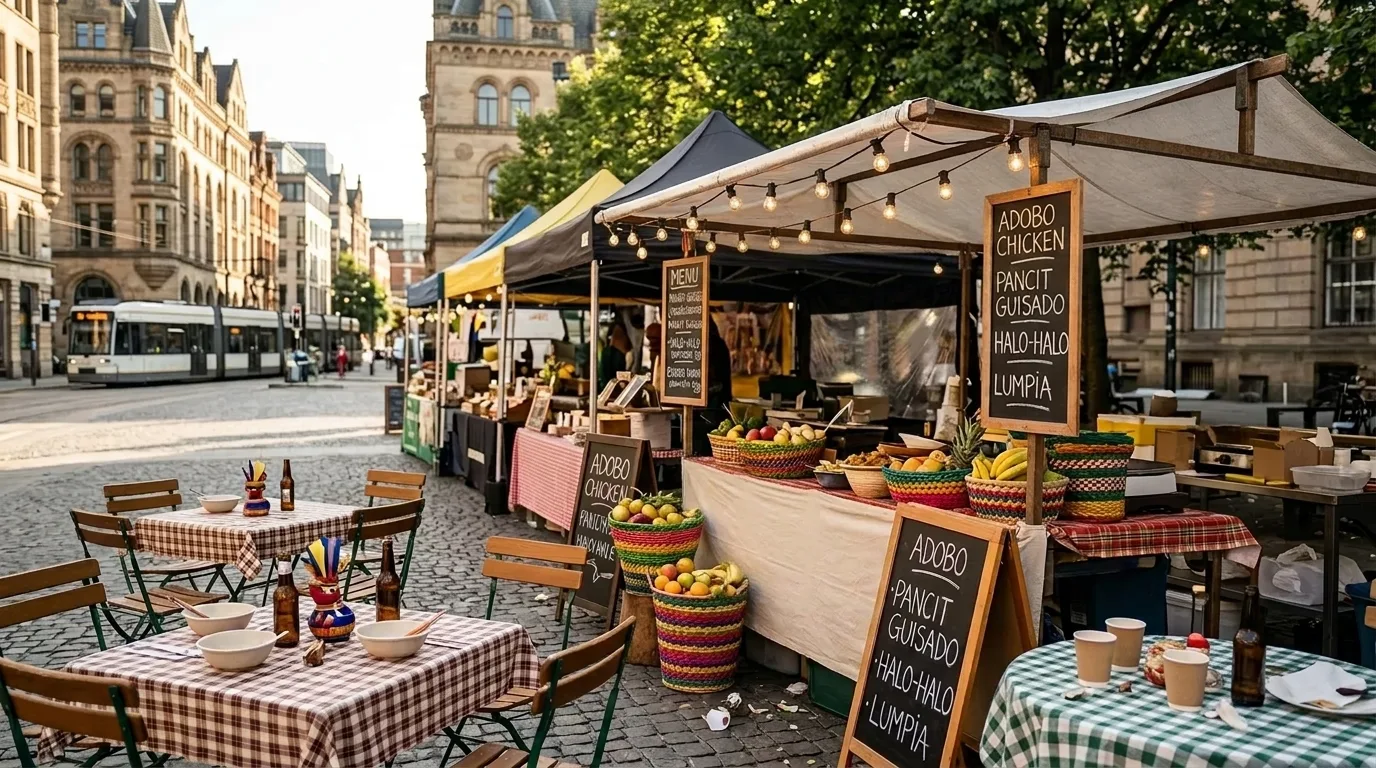
In Europe, cities such as London, Milan, Madrid, and Berlin are beginning to host Filipino-inspired night food events, often as part of multicultural summer festivals or weekend street food pop-ups.
In the Middle East, particularly Dubai and Abu Dhabi, night markets are gaining popularity among expatriate communities. These events often take place in open-air venues or shopping district courtyards, combining Filipino food stalls with live entertainment.
In the Asia-Pacific region, cities like Sydney, Melbourne, and Singapore have embraced Filipino night markets as part of their broader multicultural food scenes.
The Food That Defines the Experience
At the heart of every Filipino night market is food—bold, flavorful, and deeply comforting.
Visitors can expect a wide range of dishes, including:
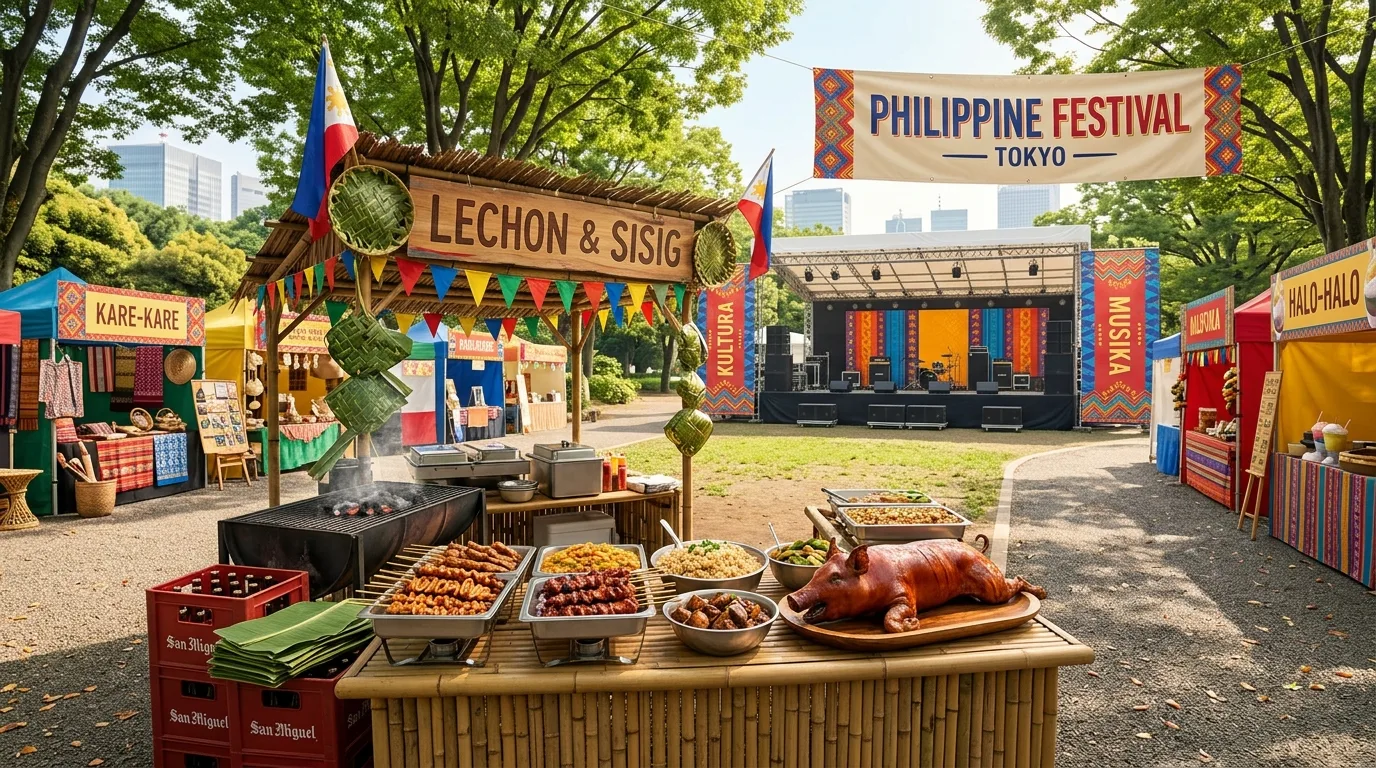
Inihaw (grilled skewers) – chicken, pork, and seafood grilled over charcoal Sisig – sizzling chopped pork served on hot plates Lumpia – crispy spring rolls filled with meat or vegetables Isaw and street BBQ – classic Filipino street snacks Pancit noodles – stir-fried noodle dishes with vegetables and meat Arroz caldo and lugaw – warm rice porridge for late-night comfort Halo-halo – colorful shaved ice dessert with milk and toppings Turon and kakanin – fried banana rolls and rice-based sweets
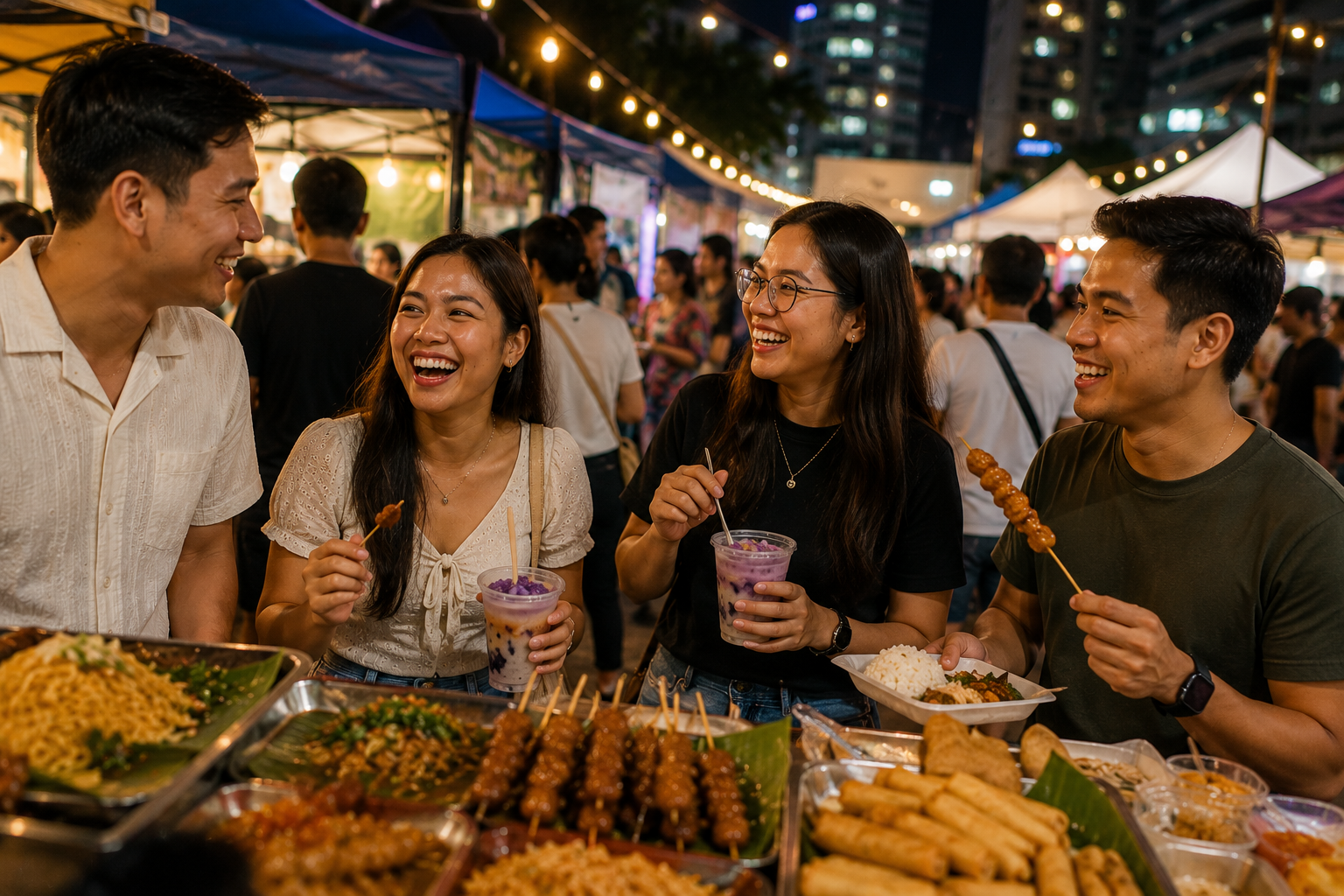
The appeal lies not just in taste, but in experience: food is cooked in front of customers, served quickly, and enjoyed in a communal, energetic setting.
The Social Experience: More Than Just Eating
Filipino night markets are designed to be social spaces.
Unlike traditional restaurants, these markets encourage movement, exploration, and interaction. Visitors often walk from stall to stall, sampling different dishes while enjoying live performances and music.
Common features include:
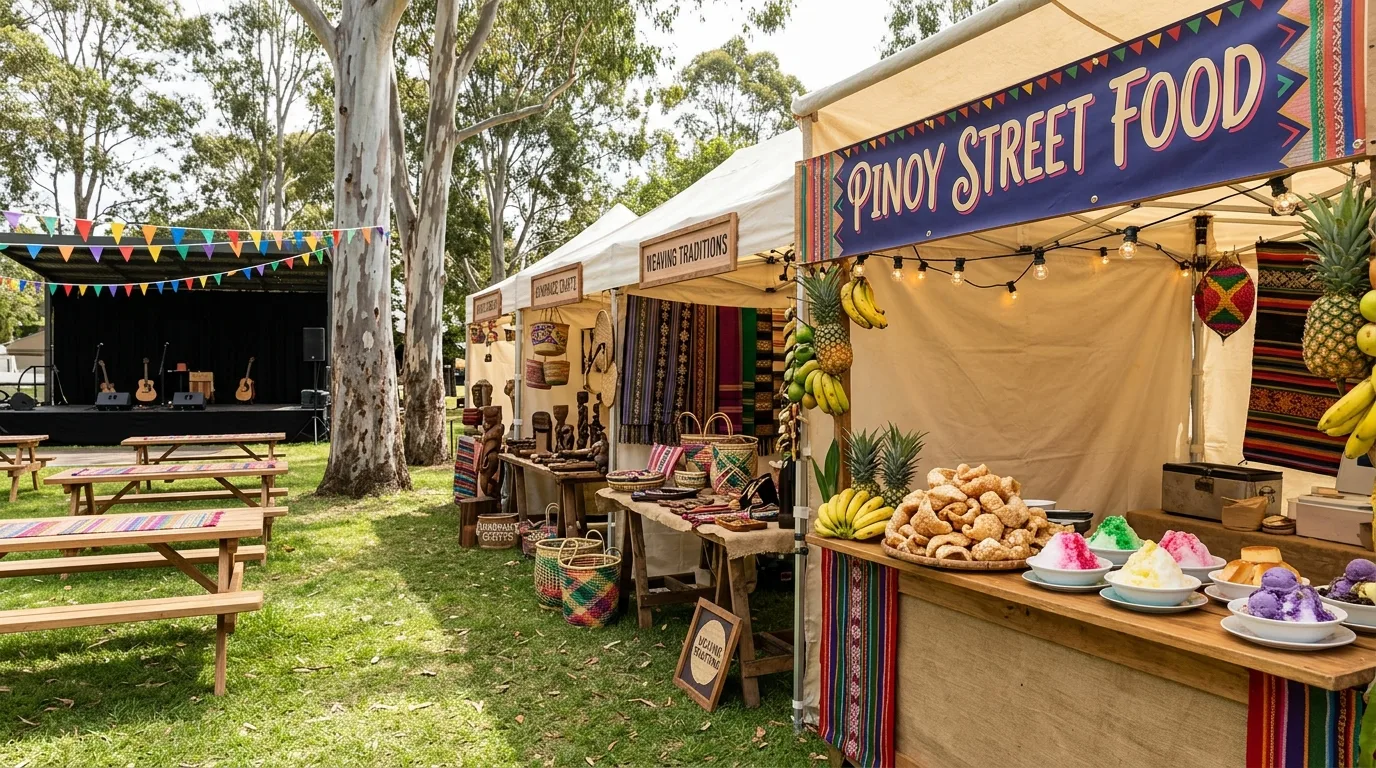
Live bands playing OPM (Original Pilipino Music) Cultural dance performances Karaoke corners where guests can sing Artisan stalls selling crafts and clothing Community booths promoting Filipino organizations
This creates an atmosphere that feels more like a festival than a food court.
The Role of the Filipino Diaspora
The global rise of Filipino night markets is closely tied to the Filipino diaspora, one of the largest migrant populations in the world.
Overseas Filipinos have long maintained strong cultural ties through food, and night markets have become a natural extension of this tradition. Many vendors are small business owners, home cooks, or aspiring chefs who use these events as a platform to introduce their food to wider audiences.
For many entrepreneurs, night markets serve as a launching pad. A successful stall can lead to catering businesses, food trucks, or even permanent restaurant openings.
Social Media Turning Night Markets Into Viral Events
Social media has played a major role in accelerating the popularity of Filipino night markets.
Videos showcasing sizzling sisig, towering halo-halo desserts, and lively street scenes often go viral on platforms like TikTok and Instagram. The combination of food visuals, crowd energy, and cultural performances makes these events highly shareable.
Influencers and food bloggers frequently highlight Filipino night markets as “must-visit” experiences, helping attract non-Filipino audiences who are curious about new culinary adventures.
As a result, many events now sell out or draw significantly larger crowds than originally expected.
A Platform for Filipino Entrepreneurs
Beyond culture and entertainment, Filipino night markets have become an important economic platform.
Small business owners use these events to:
Test new food concepts Reach diverse customer bases Build brand recognition Expand catering or delivery services Network with other entrepreneurs
This entrepreneurial ecosystem has helped many Filipino chefs and food vendors transition from informal cooking setups to established food businesses.
Cultural Identity in a Modern Setting
For many Filipinos abroad, night markets represent more than just food—they represent identity.
They offer a space where language, music, and traditions can be freely expressed without needing formal settings. Families gather, children experience cultural foods, and older generations reconnect with familiar tastes and sounds.
In many ways, these markets act as living cultural archives, preserving traditions while adapting them to modern urban environments.
Challenges Behind the Growth
Despite their success, Filipino night markets face several challenges.
Organizers often deal with:
High event costs in major cities Permitting and regulatory requirements Weather dependency for outdoor events Competition with established street food cultures from other countries Maintaining authenticity while scaling for international audiences
Still, the demand continues to grow, encouraging more organizers to innovate and expand.
The Future of Filipino Night Markets
Looking ahead, Filipino night markets are expected to become even more global and structured.
Some cities are already experimenting with permanent Filipino food halls inspired by night market concepts, while others are integrating them into tourism campaigns and multicultural festivals.
There is also growing interest in themed night markets—such as ube-focused dessert markets, regional Filipino food showcases, or fusion night markets combining Filipino cuisine with other global flavors.
Conclusion
The rise of Filipino night markets around the world reflects a powerful blend of culture, migration, and culinary creativity. What began as a local tradition in the Philippines has evolved into a global experience that brings people together through food and community.
In 2026, these night markets are more than just trending events—they are cultural bridges connecting Filipinos across continents while introducing the world to the richness of Filipino cuisine and hospitality.
As the lights turn on each night and the grills begin to sizzle, one thing becomes clear: Filipino night markets are not just growing—they are becoming a global movement.
Enjoyed this story?
Share this story